Interview: The Liverbirds
The girls who proved rock ‘n’ roll wasn’t just for the boys
Liverpool in the early 1960s was bursting with music.
The Beatles were changing the world, the Cavern was packed night after night and it seemed as though every street had another band rehearsing in a front room or garage, all dreaming of making it.
Then four young women decided they were going to join them.
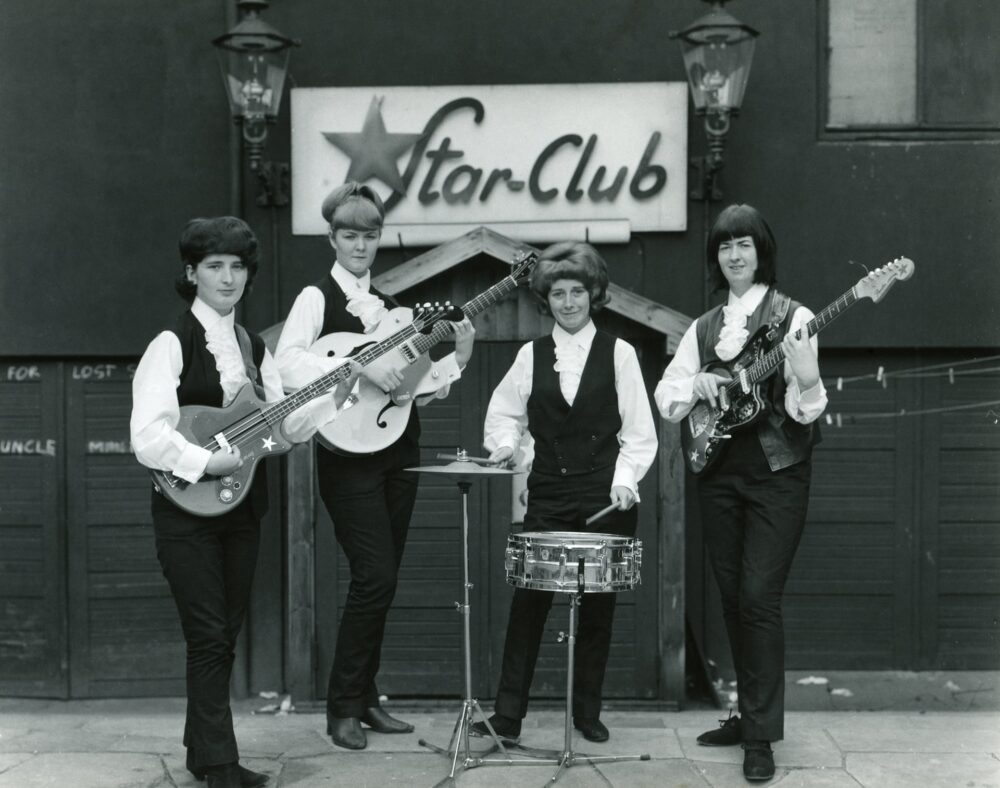
The Liverbirds became the world’s first all-female rock ‘n’ roll band, earning their reputation not because they were women, but because they could play. They shared stages with The Rolling Stones and The Kinks, turned down Brian Epstein, became stars at Hamburg’s legendary Star-Club and rubbed shoulders with everyone from Chuck Berry to Jimi Hendrix.
Ahead of the Royal Court’s production celebrating their remarkable story, I sat down with Mary and Sylvia to find out how it all began.
You were only sixteen when The Liverbirds started. Where did the idea come from?
Sylvia smiles.
“We’d only ever listened to music before that. We never imagined we’d actually be playing it ourselves.”
She and guitarist Val spent countless evenings watching local bands at Liverpool Town Hall.
“We used to say, ‘Why can’t we do what the lads are doing?'”
That simple question changed everything.
Mary laughs as she remembers her own version of events.
“I was with three of my cousins and we said, ‘If The Beatles can do it, so can we.'”
There was just one slight problem.
“None of us could play a note.”
Undeterred, they bought instruments anyway.
Then came another stroke of luck.
“We used to walk around Liverpool carrying empty guitar cases because it got us into the Cavern for free.”
One day promoter Bob Wooler spotted them.
“He said, ‘When are you girls going to play here?'”
Mary laughs.
“We thought… we’d better go and practise.”
Reality quickly arrived.
“It was much harder than we’d imagined.”
How did you all find each other?
Mary explains that an article in Mersey Beat newspaper changed everything.
“They photographed us and printed my address.”
That was enough for Sylvia and Val.
“We went looking for her,” Sylvia says.
By then she’d already discovered that the guitar wasn’t quite for her.
“My fingers were too small to stretch across the frets.”
So she chose the drums instead.
“Off we went to Rushworth & Draper.”
Being only sixteen, both girls needed their parents to sign the hire purchase agreements.
“We certainly couldn’t afford to buy the instruments outright.”
Where did you rehearse?
“In the parlour!” they laugh together.
Not the living room.
The parlour.
The room that was usually kept for best.
They alternated between Sylvia’s house and Mary’s.
“All the kids used to gather outside and shout, ‘More! More!'”
I suspect the neighbours may have felt differently.
Like The Beatles, you learned your craft at Hamburg’s Star-Club. Was that where everything changed?
Mary nods.
“We’d already been together about a year and had toured with The Rolling Stones and The Kinks.”
Then came disappointment.
“We discovered our manager was cheating us.”
Their parents thought it was time to call it a day.
“We nearly did.”
Then Hamburg happened.
“The Star-Club offered us a residency.”
Everything changed overnight.
The owner wanted to manage them.
“Why wouldn’t we?” Mary laughs.
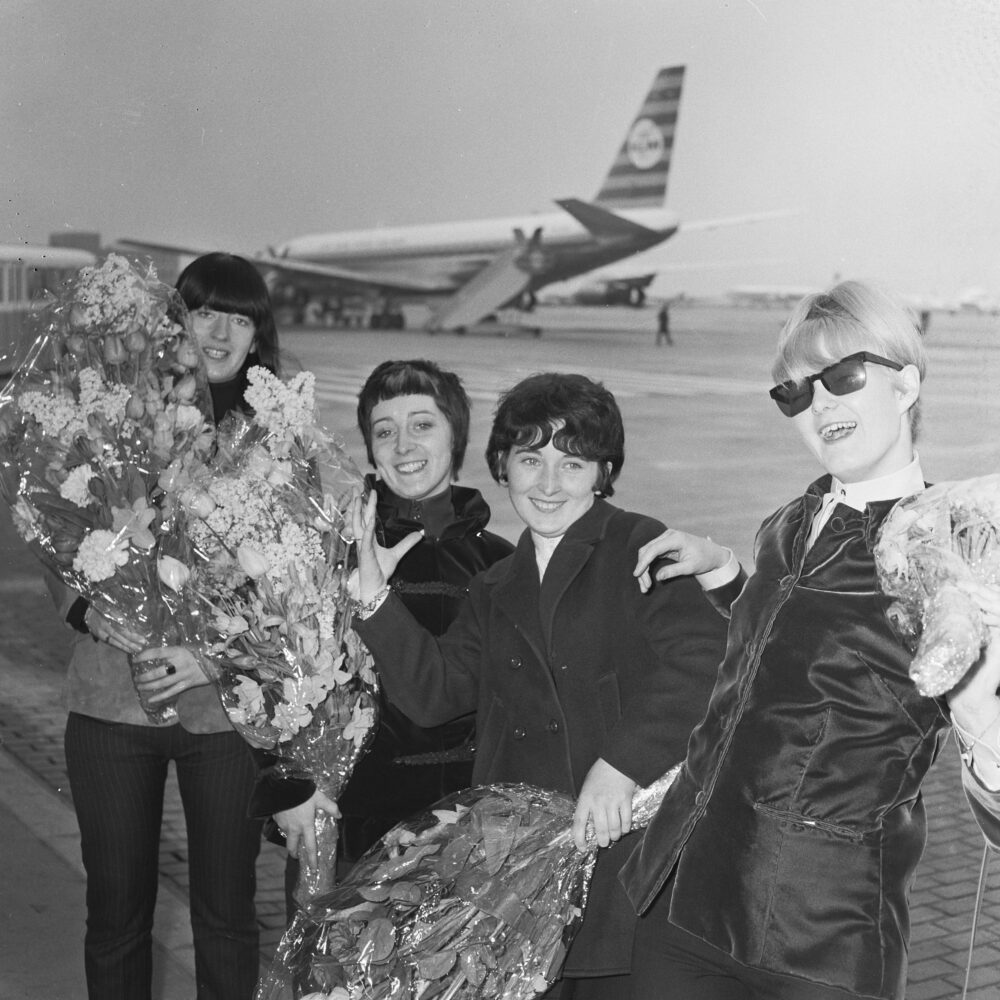
“We earned fantastic money, travelled all over Europe and Japan… and never really came back to England.”
Sylvia, you left before the Japan tour. Was that a difficult decision?
She smiles knowingly.
“Why does a woman ever leave something she loves?”
A pause.
“A man.”
She had met John while performing at the Star-Club.
“I became pregnant, and my doctor told me that if I carried on touring, I’d lose the baby.”
Some decisions, she says, are simply bigger than music.
One thing that always fascinated me was your image. Why the shirts, waistcoats and trousers?
Sylvia laughs.
“Well, I was the drummer…”
She doesn’t need to say any more.
Mary finishes the story.
“Pam joined the band and took one look at us.”
“She said, ‘Those dresses have got to go!'”
Once they arrived in Hamburg, photographer Astrid Kirchherr helped complete the transformation.
Black trousers.
Waistcoats.
White shirts.
Sharp new hairstyles.
“We’d both had lovely bouffant hair before that!” Mary laughs.
The Liverbirds’ iconic look was born.
Which artists have inspired you over the years?
The answer isn’t who I expected.
“Beryl Marsden,” Sylvia says immediately.
“She had, and still has, one of the greatest voices I’ve ever heard.”
She still can’t understand why Beryl didn’t achieve the recognition she deserved.
Mary’s choices are more contemporary.
“Amy Winehouse.”
Then, without hesitation…
“Lady Gaga.”
If you could have joined any of the Merseybeat bands, just for the fun of it, who would you have chosen?
Mary doesn’t hesitate.
“The Merseybeats.”
Sylvia grins.
“I had a bit of a crush on Mark Peters.”
Some things never change.
Finally, if you could both go back and give your eighteen-year-old selves one piece of advice, what would it be?
Sylvia bursts out laughing.
“Don’t get pregnant!”
Then, becoming more reflective, she adds,
“Just keep going. There were so many venues back then. There aren’t many now. If you’re starting a band today… just keep going.”
Mary’s advice is equally heartfelt.
“Do exactly what you want to do.”
“Don’t let anyone talk you out of it.”
As our conversation ended, I found myself thinking about the generations of female musicians who’ve followed in The Liverbirds’ footsteps.
Today, all-female bands barely raise an eyebrow.
Back in 1963, four teenage girls from Liverpool changed that forever.
They simply picked up their instruments, ignored the doubters and got on with it.
Sometimes that’s all a pioneer really does.