Tony Schumacher: The Stories That Saved His Life
Some stories are written because someone has a good idea.
Others are written because someone has no other choice.
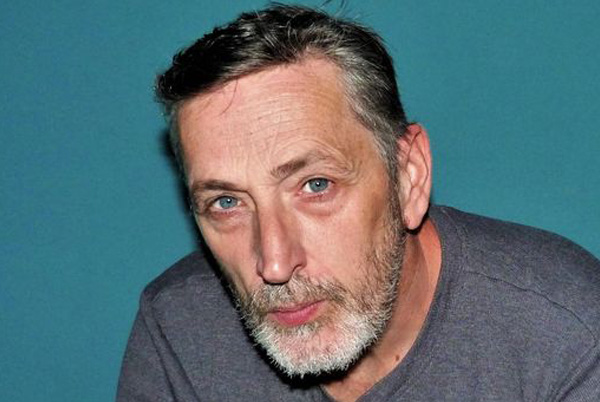
Tony Schumacher’s belongs firmly in the second category.
There was a time when the former Merseyside police officer had lost almost everything. His marriage had broken down, his career was over and he was sleeping rough in his car with only his dog, Boo, for company.
“I honestly thought about ending it,” he tells me quietly.
Then he pauses.
“The only thing that stopped me was Boo. I couldn’t bear the thought of him ending up in kennels.”
It’s impossible to hear those words without wondering how a man can fall so far.
Ironically, that lowest point would eventually become the beginning of an extraordinary new chapter.
Today, Tony is the writer behind the BBC’s critically acclaimed drama The Responder, starring Martin Freeman, and the author of several bestselling novels. But his route to success was anything but straightforward.
As a boy, he dreamed of becoming a writer.
School, however, had other ideas.
“When the teacher talked, it was like the teacher in Charlie Brown,” he laughs. “Just muffled noise. Nothing made sense.”
Tony doesn’t laugh when he talks about leaving school.
“People laugh when I say I was thick, but I genuinely believed I was.”
An unclassified grade in English seemed to confirm it.
His only qualifications were a GCSE in metalwork and a CSE in Geography.
His parents desperately wanted him to stay on and retake his exams.
Eventually he agreed.
“I said I’d go back if I didn’t find a job before September.”
He smiles.
“I lasted two days.”
A friend rang offering him work as a roofer.
The classroom disappeared in the rear-view mirror.
Tony readily admits he wasn’t much better at roofing than he had been at English.
“I was dreadful.”
Fortunately, his boss, Dave, saw something that Tony couldn’t yet see himself.
Every day, Dave set him a challenge.
He’d ask a question about current affairs and Tony had to return the following morning with the answer.
That meant reading newspapers, listening to the news and asking questions at home.
If he got it wrong…
He’d get a punch on the arm.
“You couldn’t get away with that now,” Tony laughs.
“But somehow it worked.”
For the first time in his life, someone had made him curious about the world.
A string of jobs followed.
Labouring.
Cruise ships.
Temporary work.
Never quite finding his place.
Then, one Thursday evening, everything changed.
Browsing the jobs pages in the Liverpool Echo, Tony applied for two vacancies.
One was with an underground drainage company.
The other…
Merseyside Police.
He got both.
The drainage job came first.
“I hated it.”
Thankfully, the police called.
Tony still laughs when he remembers his first day of training.
“There were about thirty of us sitting in a room, and everyone had to explain why they’d joined the police.”
Around him came answers about childhood ambitions and lifelong dreams.
Tony had neither.
“When it came to me, I just said, ‘I wanted to be a policeman so I could pay the mortgage.'”
The room erupted with laughter.
“The funny thing is… it was true.”
His two modest qualifications were enough to get him through the door.
At first, policing was everything he had hoped for.
“It was funny, exciting and fast-moving.”
But there was another side.
The deaths.
The trauma.
The things no one ever talks about.
Day after day, they accumulated quietly.
“I thought I was having a breakdown.”
Looking back now, Tony believes it was almost certainly post-traumatic stress.
Eventually, everything unravelled.
His career ended.
His marriage ended.
His home disappeared.
All that remained was a car.
And Boo.
Once a friend helped him find somewhere to live again, Tony decided to do something he’d wanted to do since childhood.
He wrote.
Not because he knew how.
Because he had nothing left to lose.
“I learned scriptwriting from YouTube,” he says, laughing at the memory.
“I see the whole film in my head and then write down absolutely everything.”
When Tony says everything…
He means everything.
“Today I’m writing a scene with an Everton mug.”
He smiles.
“The chip isn’t white. It isn’t grey. It’s brown because it’s had so much tea in it over the years.”
That tiny detail tells you everything you need to know about the writer he has become.
Nothing is accidental.
Everything has a history.
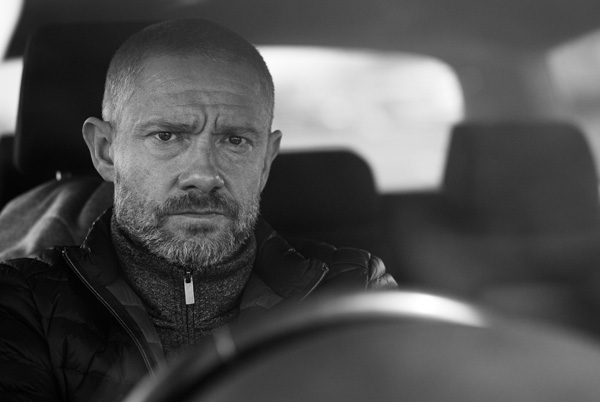
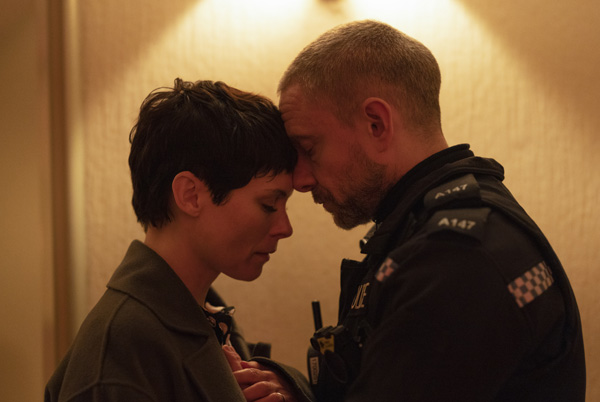
That extraordinary attention to detail runs through The Responder, the BBC drama that introduced viewers to Chris Carson, brilliantly played by Martin Freeman.
A police officer stretched beyond breaking point.
Morally compromised.
Exhausted.
Trying desperately to hold together every part of his life while quietly falling apart inside.
I asked Tony how much of Chris was actually him.
“The mental side… absolutely.”
He pauses.
“I spent so much time trying to save everybody else that I forgot about myself and my family.”
Chris’s corruption, however, came from somewhere else.
“Years after I’d left the police, I opened the paper and there was someone I’d served with on the front page facing drug charges.”
That single image planted another seed.
“It made me think…”
As our conversation drew to a close, I couldn’t help thinking how strange life can be.
The boy who believed he wasn’t clever enough to pass English has become one of Britain’s most compelling television writers.
Perhaps Tony Schumacher was never bad at English.
Perhaps nobody had ever shown him the right way to tell his stories.